

Amputation Injury Lawyer
Introduction to Motorcycle Amputation Injuries
Losing a limb in an Alpharetta motorcycle accident is not only a medical emergency. It is a permanent disruption to your independence, income, and family stability. Amputation injuries affect how you work, move, and care for yourself. They also reshape long-term plans in ways that are impossible to anticipate in the days following a serious crash.
In a single moment, normal life can disappear. Medical bills begin arriving almost immediately. Time away from work extends longer than expected. Tasks that once required no thought may now take planning, assistance, or adaptive equipment. The emotional impact often continues long after the initial trauma, particularly as injured riders begin to understand the permanent nature of limb loss.
Motorcycle amputations frequently occur at the scene or shortly after arrival at the hospital. In many cases, emergency surgical amputation is required to prevent infection, control bleeding, or save the injured rider’s life. These decisions are made quickly, often without the injured person fully understanding the long-term consequences.
While your recovery becomes the primary focus, legal and financial issues pile up. Insurance companies begin evaluating the claim almost immediately, often before the injured rider has stabilized. How the case is handled from the start can directly affect the compensation available for your lifelong medical needs, lost earning capacity, and diminished quality of life.
Severe Injuries Deserve Serious Legal Attention
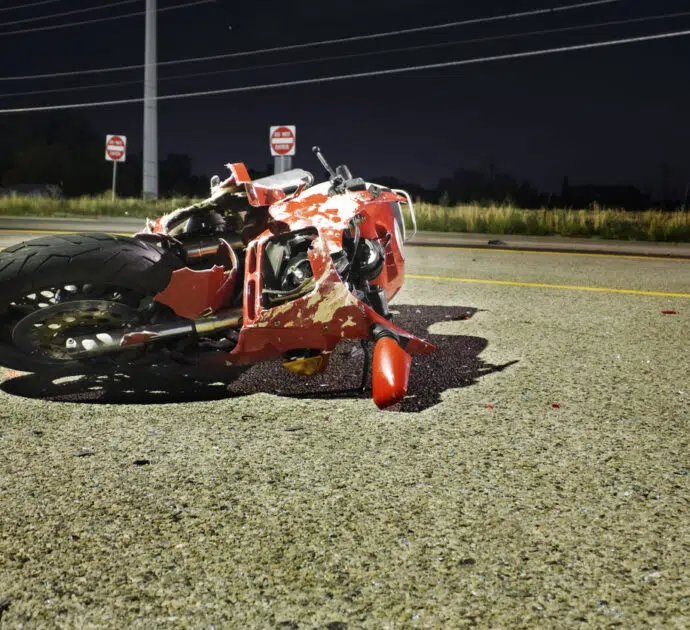
Motorcycle amputation injuries usually result from violent impacts, crushing forces, or situations where a rider becomes trapped between vehicles. Motorcycle crashes often cause more severe injuries than many other traffic collisions because riders lack the structural protection provided by enclosed vehicles.
Many amputation injuries occur when drivers fail to yield, turn left in front of a motorcycle, follow too closely, or drive while distracted. Despite this, motorcyclists are often treated with suspicion immediately after a crash. Police reports, insurance adjusters, and opposing parties may assume the rider was speeding or riding recklessly before fully examining the evidence.
This early bias can shape the entire claim. Fault may be unfairly shifted. Injuries may be minimized. Settlement offers may be framed as generous while failing to account for permanent disability and long-term care needs.
Amputation cases require focused legal attention because the stakes are higher. The injuries are permanent. The medical costs extend for decades. The financial consequences reach beyond the injured rider to spouses, children, and dependents.
Insurance Bias Against Motorcyclists Is Real
Insurance bias against motorcyclists is not subtle. Many insurers approach motorcycle claims with the expectation of denying liability or reducing payouts. Adjusters may question visibility, speed, helmet use, or lane position to assign fault to the rider.
In amputation cases, this bias often increases. The financial exposure is significant. Future prosthetic care, rehabilitation, and lost earning capacity are significant claims that insurers actively seek to limit.
Quick settlement offers are common and rarely reflect the true cost of limb loss. These offers may arrive while the injured rider is still hospitalized or before doctors can fully assess future limitations. Accepting such an offer can leave you responsible for medical expenses that continue long after the claim closes.
Successfully addressing insurance bias requires legal representation that understands how these claims are evaluated and challenged. Bulldog Bike Law Firm focuses exclusively on motorcycle-related cases and is familiar with the tactics insurers use to reduce or deny compensation for injured riders.
Protecting Your Future After a Devastating Crash
Georgia law allows injured motorcyclists to pursue compensation when another party’s negligence causes harm. In amputation cases, compensation may address emergency care, surgical treatment, prosthetics, rehabilitation, lost income, reduced earning capacity, and the permanent impact of disability.
Pursuing these claims requires detailed documentation and a clear presentation of how the injury affects every aspect of life. Medical records alone are not enough. The long term consequences of amputation must be explained in a way that insurers and opposing parties cannot easily dismiss.
Bulldog Bike Law Firm represents injured riders who need legal guidance focused entirely on motorcycle crashes and the realities you face after catastrophic injuries. By limiting our practice to motorcycle-related cases, our firm gains deep familiarity with both the injuries and the insurance tactics involved.
Common Causes of Motorcycle Amputation Injuries
Motorcycle amputation injuries are rarely unavoidable. In many cases, they occur because another party failed to drive responsibly or ignored basic traffic rules. Identifying the cause of the crash is central to building a successful injury claim.
Rear-end collisions, left-turn accidents, unsafe lane changes, and failure to yield are frequent causes of severe motorcycle injuries. When a rider is struck from behind or sideswiped at speed, the risk of crushing injuries and limb loss increases significantly.
Roadway hazards also play a role. Uneven pavement, loose gravel, potholes, and poorly marked construction zones pose greater risks to motorcycles than to larger vehicles. In certain situations, responsibility may extend beyond individual drivers to contractors or government entities.

Negligent and Reckless Driver Behavior
Many motorcycle amputation injuries are caused by negligent driver behavior. Speeding, distracted driving, impaired driving, and aggressive lane changes are common contributing factors. Left-turn collisions are especially dangerous and often occur when drivers misjudge distance or fail to see an approaching motorcycle.
Drivers frequently claim they did not see the motorcycle. Under Georgia law, failing to observe other vehicles can still constitute negligence when a driver fails to maintain proper lookout or violates traffic rules.
Establishing fault often requires a careful review of police reports, witness statements, vehicle damage, and crash-scene evidence. In high-severity cases, accident reconstruction may be used to clarify how the collision occurred.
Dangerous Road Conditions and Visibility Issues
Poor road conditions pose a heightened risk to motorcyclists. Uneven pavement, debris, inadequate signage, and unsafe construction zones can contribute to catastrophic crashes. Visibility issues, such as obscured intersections or poorly designed roadways, may also play a role.
When roadway defects contribute to a crash, liability may extend beyond individual drivers. Determining responsibility requires careful investigation and timely collection of evidence.
Role of an Alpharetta Motorcycle Amputation Injury Lawyer
After a motorcycle amputation injury, the legal process can feel overwhelming. Injured riders must manage medical treatment, financial pressure, and ongoing insurance communications while adapting to permanent physical changes.
A motorcycle amputation injury lawyer in Alpharetta helps restore balance by managing the legal process and protecting the injured rider’s interests. Bulldog Bike Law Firm focuses exclusively on motorcycle-related cases, allowing it to address the specific challenges these claims present.

Guidance Through a Complex Legal Process
Legal representation includes explaining available options, outlining the claims process, and helping clients make informed decisions. Clear communication enables injured riders to focus on recovery while their cases progress.
Dealing With Insurance Companies
Insurance companies often attempt to limit payouts in motorcycle injury claims. Our Alpharetta motorcycle amputation injury lawyers help prevent injured riders from accepting settlements that fail to account for long-term medical needs, lost earning capacity, and permanent impairment.
When negotiations do not result in fair compensation, litigation may be necessary to protect the value of your claim.
Evidence Collection and Case Development
Strong claims rely on thorough evidence collection. Police reports, witness statements, photographs, medical records, and expert analysis all contribute to establishing liability and damages.
Avoiding Costly Mistakes
Recorded statements, missed deadlines, and early settlements can significantly reduce compensation. Legal guidance helps you avoid these mistakes and protect your claims from the beginning.
Advocacy Through Settlement or Litigation
Many motorcycle injury claims resolve through settlement, but not all insurers act reasonably. Preparing cases for litigation strengthens your negotiation leverage and demonstrates a commitment to pursuing fair outcomes.
Medical Treatment and Rehabilitation
Motorcycle amputation injuries require extensive medical care. Treatment often begins with emergency surgery and continues through long-term rehabilitation.

mergency Care and Surgical Treatment
Hospitalization, follow-up procedures, and infection prevention are common. Early treatment decisions can influence recovery and long-term outcomes.
Rehabilitation, Prosthetics, and Ongoing Care
Rehabilitation often includes physical therapy, occupational therapy, and prosthetic care. Prosthetic devices require maintenance, replacement, and adjustment over time.
Importance of Medical Documentation
Detailed medical records help demonstrate injury severity, treatment needs, and permanent limitations. Incomplete documentation can weaken a claim.
Coordinating Medical Evidence With Legal Claims
Experienced lawyers often coordinate with medical providers to explain how amputation affects mobility, independence, and earning capacity.
Why Ongoing Care Matters for Compensation
Compensation must account for future medical care, rehabilitation, prosthetic needs, and long-term limitations. Proper documentation helps ensure these costs are not shifted onto the injured rider.

Building a Strong Amputation Injury Claim
Your motorcycle amputation injury claims require careful preparation and early evidence preservation.
These cases are closely examined by insurance companies due to their high value.
Prompt Evidence Collection Matters
Accident reports, photographs, and witness statements are most reliable when collected promptly. Delays increase the risk of disputes.
Medical Records and Injury Documentation
Medical records connect the crash to the full scope of harm suffered. Surgical reports and rehabilitation notes are central to this process.
Evaluating Economic and Non-Economic Damages
Economic damages may include medical expenses, lost wages, and reduced earning capacity. Non-economic damages may address pain, emotional suffering, and loss of independence.
Addressing Insurance Company Challenges
Insurance companies often challenge the severity of injuries and future care needs in a motorcycle accident claim. Preparation and documentation help counter undervaluation.
Proving Fault and Reconstructing the Crash
Establishing negligence in a motorcycle accident may involve accident reconstruction and a detailed analysis of how the collision occurred.
Understanding Motorcycle Injury Law and Proving Fault
Motorcycle amputation injury claims fall under Georgia personal injury law. Georgia requires most riders to wear helmets, and compliance may affect liability arguments. Georgia also requires a minimum of $25,000 in bodily injury liability coverage per person and $50,000 per incident. Unfortunately, this minimal insurance coverage may be insufficient to cover your full expenses. This is where the skills of a highly experienced amputation injury lawyer are critical to maximize your compensation.
Bulldog Bike Law Firm is an experienced personal injury law firm that only handles motorcycle related claims. We help injured riders understand the legal process, applicable deadlines, and available compensation. Because the firm handles only motorcycle-related cases, it is familiar with how insurers evaluate and challenge such claims.
Our goal is to build a clear, well-supported claim that reflects the true impact of your amputation injury. With the right legal approach, you can focus on recovery while protecting your legal rights and financial future. Contact our experienced amputation injury lawyers at Bulldog Bike Law Firm today for a free consultation.

Frequently Asked Questions
What compensation can I recover for a motorcycle amputation injury?
Compensation may include medical expenses, future prosthetic care, rehabilitation, lost income, reduced earning capacity, pain and suffering, and permanent impairment. In severe cases, damages may also address long-term care needs and life changes. Motorcycle accident injury lawyers can help clients recover maximum compensation for their medical bills and lost wages.
How is liability determined in motorcycle amputation injury cases?
Liability is determined by examining evidence such as police reports, witness statements, crash-scene analysis, vehicle damage, and applicable traffic laws. The goal is to show how another party’s negligence caused or contributed to the crash.
What should I do immediately after a motorcycle accident resulting in amputation?
Seek emergency medical care first. If possible, document the scene, gather witness information, and avoid giving recorded statements to insurers. Preserving evidence early can protect your ability to pursue full compensation later.
How long do I have to file a motorcycle amputation injury claim in Georgia?
In most cases, Georgia law allows two years from the date of the accident to file a personal injury claim. Missing this deadline can permanently bar recovery, so acting promptly is critical.
Should I accept the insurance company’s first settlement offer?
Initial settlement offers are often far lower than the true value of an amputation injury. Accepting too early may leave you responsible for future medical costs, prosthetics, and lost income not covered by the offer.
Can I recover compensation if I was partially at fault?
Georgia follows a modified comparative negligence rule. You may recover compensation if you are less than 50 percent at fault, though your recovery can be reduced by your percentage of responsibility.
How do lawyers calculate damages for amputation injuries?
Damages are calculated by evaluating current and future medical costs, prosthetic needs, lost earnings, diminished earning capacity, physical pain, emotional distress, and the permanent impact on daily life and independence.
Are motorcycle amputation injury cases usually settled or go to trial?
Many cases resolve through settlement, but some proceed to trial if insurers dispute liability or damages. Preparation for litigation strengthens negotiation leverage and helps protect the full value of the claim. When selecting a lawyer, it is important to verify trial readiness by asking about the attorney’s history of jury verdicts, not just settlements. A proven track record in securing successful verdicts and settlements is crucial.
Can I pursue a claim if the accident was a hit-and-run?
Yes. Compensation may be available through uninsured motorist coverage or other insurance options. A thorough investigation can also help identify the at-fault driver when possible.
How much does it cost to hire a motorcycle amputation injury lawyer in Alpharetta?
Most motorcycle accident injury lawyers handle cases on a contingency fee basis. You typically pay nothing up front, and legal fees are only collected if compensation is recovered through a settlement or verdict.
What should I look for when choosing an Alpharetta motorcycle amputation injury lawyer?
Clients should prioritize specific experience with motorcycle accident cases and clear communication. Choosing a lawyer who is a rider themselves can provide a deeper understanding of motorcycle-specific issues. In 2026, a motorcycle amputation injury lawyer in Alpharetta serves as a comprehensive advocate for victims of catastrophic accidents.


